

Your business is preparing for a new website, launching a product or planning its next marketing campaign. You know you need professional visuals, but one question keeps coming up:
Should you hire a photographer, invest in video production or do both?
It sounds simple, but choosing the wrong format can leave your marketing team with content that looks good but doesn’t communicate what customers actually need to know.
Many Nigerian businesses manage budgets carefully. Every marketing expense needs to serve a purpose, especially when there are competing priorities.
The decision between corporate photography and videography should therefore begin with your communication goals, not simply which format looks more impressive.
Both have distinct strengths. Understanding those strengths will help you invest in content that supports your business rather than creating visuals you struggle to use.
What Is the Difference Between Corporate Photography and Videography?
Corporate photography focuses on producing professional still images that represent a business, its people, products, services or working environment.
These images can appear on websites, company profiles, social media pages, brochures, presentations and advertising materials.
Corporate videography, on the other hand, uses moving images, sound, interviews and storytelling to communicate a message.
A corporate video might introduce your company, demonstrate a product, explain a service or document an important event.
The difference goes beyond movement.
Photography helps people see what your business offers. Video helps them experience, understand or connect with it.
Neither format is automatically better. Their usefulness depends on your audience, message and intended distribution channels.
When Photography Is the Better Choice for Your Business

Professional business photography is particularly valuable when your audience needs to recognise, evaluate or remember something quickly.
1. Building a Professional Business Website
Imagine visiting the website of a consulting company in Lagos.
You want to see the people behind the business, its office environment and evidence of its professional identity.
Clear photographs of the leadership team, workplace and staff immediately provide useful visual context.
Unlike video, photographs can support several sections of a website without requiring visitors to press play.
For company profiles, team pages, service pages and website banners, photography is often the most practical starting point.
2. Presenting Products Clearly
Businesses selling fashion, furniture, food, beauty products or physical merchandise need images that show customers exactly what they are considering.
High-quality product photographs make it easier to examine colours, packaging, design and other important details.
They are also useful across e-commerce websites, digital catalogues, advertisements and social media.
Video can complement these images, but customers still need clear photographs to compare products and make purchasing decisions.
3. Maintaining Consistent Brand Visibility
Not every business update requires a video.
Your marketing team may need photographs for staff announcements, LinkedIn posts, press releases, company newsletters or promotional graphics.
A well-planned brand photography session can produce a library of images suitable for different communication needs.
This gives businesses access to consistent, professional visuals without organising a new shoot for every announcement.
Choose photography when your priority is clarity, visual consistency and versatility across multiple platforms.
When Videography Is the Better Investment
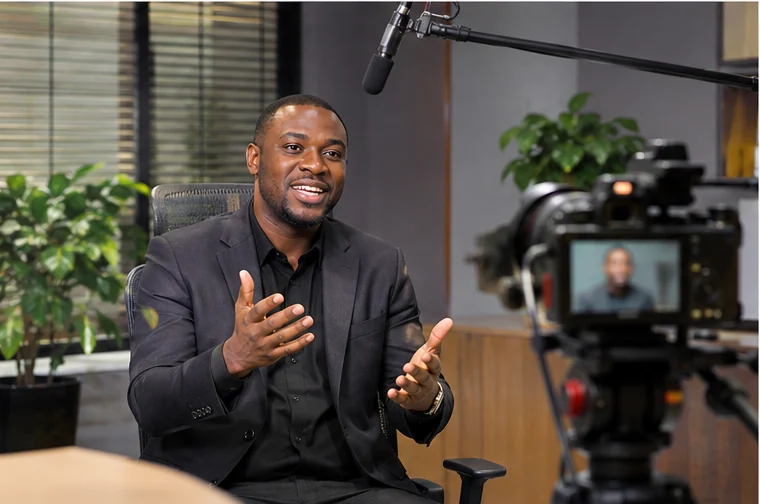
There are situations where photographs alone cannot communicate the full value of what your business does.
This is where professional video production becomes particularly useful.
1. Explaining Products and Services
Some services are difficult to understand through still images.
Consider a Nigerian technology company introducing a new digital platform.
Screenshots may show the interface, but a short demonstration video can explain how users navigate the platform, solve a problem and benefit from its features.
The same applies to manufacturing businesses demonstrating machinery or service providers explaining their processes.
Video allows you to show not only what something looks like, but how it works.
2. Building Trust Through Real People
Customers often want to understand the people and thinking behind a company.
A founder explaining why a business was established can communicate personality, conviction and purpose in ways that a portrait alone cannot.
Customer testimonials, employee interviews and leadership messages are other examples where video adds value.
Facial expressions, tone of voice and natural conversations can make the message feel more personal.
For businesses offering professional services, this human connection can be particularly important.
3. Creating More Engaging Campaign Content
When your objective is to demonstrate an experience, tell a story or guide viewers through a process, corporate videography offers additional creative possibilities.
A restaurant can show how a signature meal is prepared.
A property developer can take prospective buyers through a completed apartment.
A fashion brand can show how its clothing looks in motion.
These stories can become website videos, advertisements, product demonstrations or short-form social media content.
However, video is not automatically more effective simply because it moves.
Its success still depends on a clear message, appropriate length, strong production and relevance to the intended audience.
Choose video when your message needs explanation, demonstration, emotion or storytelling.
Photography vs Videography: A Practical Business Comparison
The right format often becomes clearer when you consider where the finished content will be used.
| Business Need | Recommended Format |
|---|---|
| Staff profiles and corporate headshots | Photography |
| Product catalogues and e-commerce listings | Photography |
| Company introduction or brand story | Video |
| Customer testimonials and interviews | Video |
| Service demonstrations and tutorials | Video |
| Website banners and company profiles | Photography |
| Conferences and product launches | Both |
| Full marketing campaigns | Both |
This comparison is a starting point, not a fixed rule.
A simple product may need photographs for its catalogue and a demonstration video for advertising.
An executive might need a professional portrait for LinkedIn and a short interview for the company’s website.
The most useful approach is to match each format to a specific business objective.
When Corporate Photography and Videography Work Better Together
Sometimes the strongest decision is not choosing between the two.
A coordinated corporate photography and videography project can give your business a wider range of assets from one production.
Imagine a growing Nigerian company launching a new service.
The marketing team needs website photographs, portraits of key employees, promotional images, a company introduction video and short clips for social media.
Organising photography and video separately could mean booking the location twice, arranging additional staff availability and repeating parts of the production setup.
Planning both together may reduce duplicated effort while keeping the visual style consistent.
It can also provide more opportunities to capture useful content during the same production period.
However, combined production still needs proper coordination. Lighting, audio recording, crew responsibilities and shooting schedules must be considered so that neither photography nor video quality is compromised.
One Production, Multiple Marketing Assets

A coordinated shoot could produce:
- Professional staff portraits for your website.
- Workplace and behind-the-scenes photographs.
- A company introduction video.
- Short interviews with team members.
- Vertical videos for Instagram and other platforms.
- Promotional photographs for digital campaigns.
Instead of commissioning content around a single post, you begin building a reusable collection of marketing content.
This approach is particularly useful for businesses preparing a rebrand, website redesign, product launch or major marketing campaign.
How to Decide What Your Business Actually Needs
Before hiring a photographer or video production team, ask four practical questions.
1. What Are We Trying to Achieve?
Are you improving your company’s professional appearance, explaining a service, attracting enquiries or introducing a product?
Your objective should influence the format.
If customers primarily need to see your team and facilities, start with photography. If they need to understand a complex process, consider video.
2. Where Will the Content Be Published?
Content for a website banner has different requirements from a YouTube introduction or Instagram Reel.
Think about the platforms your customers already use and what each channel needs.
This prevents situations where you produce an excellent horizontal video but lack the vertical clips required for your campaign.
3. How Long Will We Use the Content?
Professional portraits, product images and workplace photographs can remain useful for an extended period, provided they still represent your business accurately.
A brand video may also have a long lifespan, while campaign-specific videos might be relevant for only a few weeks.
Think about how frequently your content needs updating and whether it can be reused in different formats.
4. What Can Our Budget Realistically Support?
You do not have to produce everything at once.
If resources are limited, prioritise the assets that solve your most immediate communication problem.
A smaller, well-executed photography project may deliver more value than an ambitious video that cannot be completed properly.
Alternatively, a carefully planned video may be the better investment if explaining your service is the biggest obstacle to winning customers.
The goal is not to purchase the largest production package. It is to create the right content.
Why Planning Matters More Than Choosing a Camera
One of the biggest mistakes businesses make is focusing entirely on the shoot itself.
They discuss cameras, lighting, locations and production dates without defining what the finished content should achieve.
But professional corporate photography and videography begins before anyone picks up a camera.
A useful creative brief should identify the target audience, key messages, intended platforms, visual style and required deliverables.
For example, a Lagos-based accounting firm and a skincare brand may both need professional media, but their priorities will be completely different.
The accounting firm may focus on leadership portraits, workplace images and expert interviews.
The skincare brand may need product photography, lifestyle content and demonstration videos.
A production plan built around those needs helps ensure the final content has practical value.
Frequently Asked Questions
Is photography or videography better for a small business?
It depends on what customers need to see or understand. Photography is often useful for building a professional website, presenting products and maintaining a consistent brand presence. Video is particularly helpful for demonstrations, testimonials and explaining services.
Can a business use photographs and videos from the same shoot?
Yes. With proper planning, a single production can include both formats. Your team should agree on deliverables, equipment, scheduling and crew responsibilities before the shoot.
Is corporate videography more expensive than photography?
Not necessarily in every case. Cost depends on production complexity, crew size, locations, filming duration, editing, sound and other requirements. A straightforward interview video may cost less than an extensive multi-location photography campaign.
How often should businesses update their photographs and videos?
Update content when products, services, branding, staff or business environments change significantly. Review older material regularly to ensure it still represents your company accurately.
Make the Right Visual Investment for Your Business
Photography and video are not competing solutions. They are different ways of communicating your business’s value.
Photography may be the strongest choice when you need professional portraits, product images or versatile brand visuals.
Video becomes more valuable when your customers need explanation, demonstrations or human connection.
And when your objectives require both, a coordinated corporate photography and videography strategy can give your marketing team a more complete collection of assets.
At HDMedia, we understand that businesses need more than visually attractive content. They need photographs and videos created with a clear purpose.
Whether you are planning a new website, refreshing your brand, launching a product or building a stronger marketing presence, the right production approach starts with understanding your goals.
Contact HDMedia to discuss the right photography and video solution for your business.
Let’s create visuals that help your business communicate with clarity, confidence and purpose.