

Event Photography Consent in Nigeria: What Corporate Organisers Should Know Before Publishing Photos
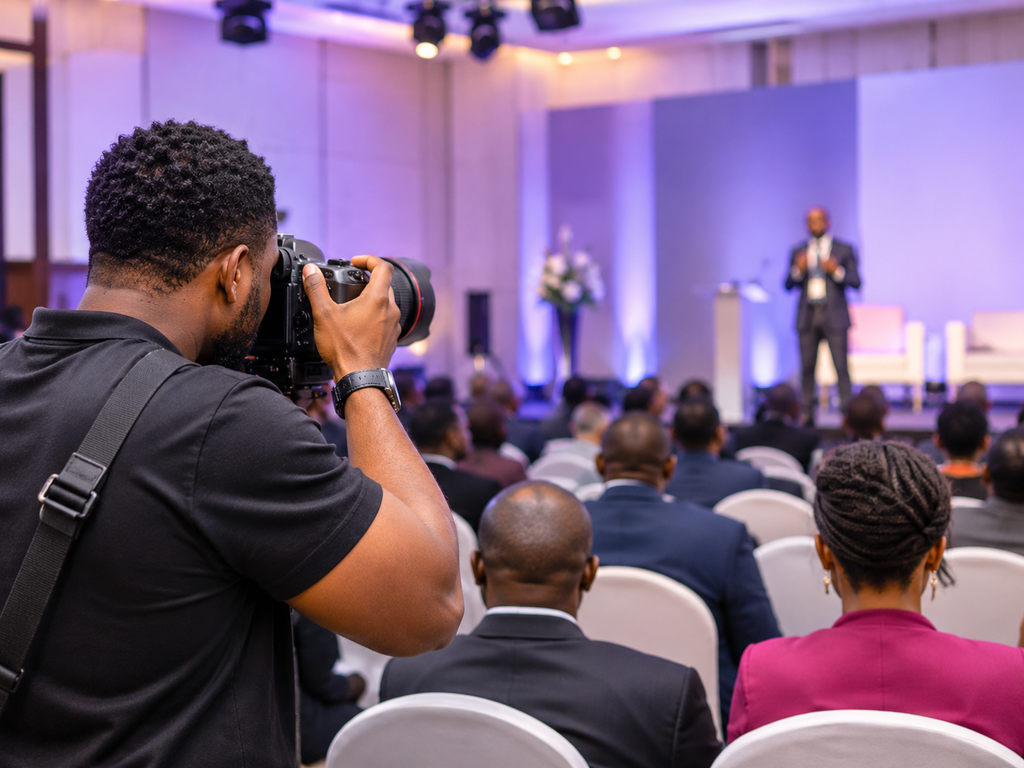
Your company has just hosted a successful conference in Lagos. The hall was full, the speakers delivered valuable presentations, and the photography team captured everything from registration to the closing remarks.
The following morning, your marketing department begins selecting photographs for LinkedIn, Instagram, press releases and the company website.
Then someone asks an important question: “Did we get permission to publish these people’s pictures?”
It’s a question more corporate event organisers should consider before the event begins.
Professional photography is an important part of documenting conferences, product launches, seminars, award ceremonies and corporate celebrations. But photographs can also contain identifiable individuals whose privacy deserves consideration.
Understanding event photography consent in Nigeria helps organisers make informed decisions about how images are captured, stored and published.
It doesn’t mean photography must become unnecessarily complicated. It means building reasonable privacy arrangements into your event planning.
1. Understand that taking a photograph and publishing it are different decisions
A photographer may capture hundreds of images during a conference.
Some photographs are used internally to document attendance or prepare reports. Others appear in public marketing campaigns, advertisements or social media posts.
Those uses are not automatically equivalent.
For example, a wide photograph showing the atmosphere of a conference may be intended for an event recap.
A close-up photograph of one attendee could later be used in an advertisement promoting next year’s conference.
The second use may require additional consideration because it could imply that the individual endorses the event or organisation.
Nigeria’s Data Protection Act 2023 establishes obligations around the lawful processing of personal data. Identifiable photographs may fall within those obligations. ndpc.gov.ng
Organisers should therefore distinguish between documenting an event and using identifiable people in promotional material.
2. Don’t assume attendance means unlimited permission
One common assumption is that anyone who attends a public or corporate event has automatically agreed to appear in every photograph published afterwards.
That is too broad.
The Nigeria Data Protection Commission’s General Application and Implementation Directive 2025 addresses circumstances in which participation in a public event may support implied consent for reporting on that event.
However, the guidance distinguishes event reporting from using those images in profit-oriented or commercial advertising, for which express consent is required under the relevant provision. ndpc.gov.ng
This distinction is important for corporate organisers.
Publishing a factual conference recap is not necessarily the same as placing an attendee’s portrait in a paid promotional campaign.
The lawful basis for each use should be assessed in context. Consent is not the only possible lawful basis for processing personal data, but organisers should not assume one exists without evaluating it.
3. Inform attendees before photography begins
A practical approach is to communicate your photography arrangements during registration.
If guests register online, include a clear photography and recording notice.
Explain whether the event will be photographed or filmed, the intended uses of the material and how attendees can raise concerns.
For example, a corporate conference registration page could explain that photographs may be used for event reporting, company communications and future promotional materials, subject to the applicable legal requirements.
Avoid hiding important information inside lengthy terms that attendees are unlikely to understand.
You can also place visible notices at the venue entrance and registration desk.
The University of Edinburgh’s photography data protection guidance offers practical examples of advance notices, event signage and ways for attendees to raise objections. It is UK guidance, not Nigerian law, but the operational practices are useful references. Data Protection
Clear communication helps prevent avoidable surprises.
4. Identify situations requiring specific permission
Not every event photograph presents the same privacy considerations.
A wide photograph of a conference hall is different from a close-up portrait, an interview or a testimonial.
If your marketing team wants to interview attendees about their experience, obtain appropriate permission for recording and the intended publication.
The same applies when a participant is asked to pose for a promotional photograph or appear in an advertising campaign.
Speakers may also have contractual arrangements governing the use of their photographs, presentations or recorded sessions.
Before the event, review speaker agreements and confirm what the organisation may publish.
When planning event photography consent in Nigeria, pay particular attention to photographs intended for commercial promotion rather than treating every image as routine event documentation.
5. Create a practical process for attendees who don’t want to be photographed
Some attendees may have legitimate reasons for avoiding photography.
They may prefer privacy, work in sensitive roles or simply not want their images published.
Organisers should decide how these requests will be handled before the event.
A practical arrangement could involve informing the registration team, designating an appropriate seating area or giving the photography crew a discreet list of coverage restrictions.
Avoid publicly identifying attendees who have requested privacy.
If someone raises an objection during the event, the team should know whom to contact and how to respond.
For large conferences, it may not be possible to guarantee that someone never appears incidentally in a wide photograph. However, organisers can take reasonable steps to prevent unwanted close-ups and inappropriate publication.
The objective is to make the process respectful and manageable.
6. Brief your photographers about privacy restrictions
Photographers need more than the event programme.
They should understand the important moments to capture, but also any restrictions on photography and publication.
For example, a company hosting an internal strategy meeting alongside a public conference may prohibit photography during the private session.
A healthcare organisation may need additional care around sensitive information visible on screens, documents or name badges.
A corporate awards ceremony may require approval before publishing photographs of certain participants.
Include these details in the production brief.
A good briefing should identify restricted areas, sensitive sessions, interview permissions, relevant contacts and the approval process for images.
HDMedia’s event photography and video production services cover the technical side of event documentation. The organiser remains responsible for communicating applicable privacy arrangements and publication requirements.

7. Review photographs before publishing
Not every technically excellent photograph should be published.
An image may be well-composed and properly exposed but still reveal information that should remain private.
Check for visible attendee contact details, confidential presentation slides, personal identification badges and sensitive documents.
Also consider whether the photograph presents someone in a misleading or embarrassing situation.
For example, a frame captured during an awkward facial expression may not fairly represent the individual or the event.
Your review process should include both visual quality and appropriate use.
A designated communications officer can approve the final gallery before photographs are shared publicly.
This is particularly important when the event includes external guests, government representatives, employees or customers.
8. Agree on storage, access and retention
Event photography produces files that may contain personal data.
Organisers should know where those files are stored and who can access them.
Ask whether the photographer will deliver the images through a private gallery, cloud folder or another secure method.
Agree on who may download the files and whether unedited photographs will be retained after delivery.
Your organisation should also establish an appropriate retention period based on its purposes and applicable obligations.
Avoid keeping unnecessary copies indefinitely without a reason.
Where a third-party production company processes personal data on your organisation’s behalf, clarify the respective responsibilities and any required contractual arrangements.
Privacy planning should continue after the event has ended.
9. Be careful when repurposing event content
A conference may generate useful photographs and videos for future communication.
That doesn’t mean every image should be reused without reviewing its original context.
An attendee photograph captured for a conference recap may later be considered for a paid advertisement.
Before repurposing it, confirm whether the new use is covered by the appropriate permission or another lawful basis.
Similarly, a recorded attendee interview should not be edited in a way that changes the meaning of their comments.
HDMedia’s article Your Event Ends in One Day. Your Content Shouldn’t explains how event coverage can support ongoing communications.
The privacy consideration is that reuse should remain consistent with the purposes communicated to participants and applicable requirements.
10. Prepare a response process for complaints or removal requests
Even with careful planning, an attendee may contact your organisation after publication.
Perhaps they were unaware that a photograph would appear online, or they have concerns about how it is being used.
Don’t ignore the request.
Identify the relevant photograph, understand the concern and review the lawful basis and circumstances of publication.
Where appropriate, remove or replace the image and coordinate with any third parties that received it.
Not every objection automatically requires deletion in every circumstance, but requests should be assessed promptly under the applicable data protection rules.
Keep records of relevant permissions, notices and decisions.
A clear response process helps your organisation address concerns consistently rather than improvising when a complaint arises.
A practical event photography privacy checklist
Before your next corporate event, confirm:
- Photography and video notices are included in registration communications.
- Attendees understand the main intended uses of their images.
- Appropriate permissions are arranged for interviews and promotional portraits.
- Speakers’ recording and publication terms have been reviewed.
- The photography crew knows restricted areas and sensitive sessions.
- Attendees have a practical way to raise concerns.
- Images are reviewed before public publication.
- Storage, access and retention arrangements are defined.
- New promotional uses are checked against the original permissions or lawful basis.
- Someone is responsible for handling privacy complaints and requests.
Conclusion: Good event photography should respect the people it captures
Corporate events bring people together to exchange ideas, build relationships and celebrate achievements.
Photography helps preserve those moments and communicate their value beyond the venue.
But responsible event coverage also requires consideration for the individuals appearing in the images.
Understanding event photography consent in Nigeria can help organisers plan more carefully, brief production teams effectively and avoid inappropriate publication.
The best time to address these questions is before the first photograph is taken.
If your organisation is preparing a conference, launch, seminar or corporate celebration, contact HDMedia to discuss event photography, videography and production planning that accommodates your coverage requirements.
This article provides general practical information, not legal advice. Organisations should consult qualified Nigerian data protection professionals where necessary.